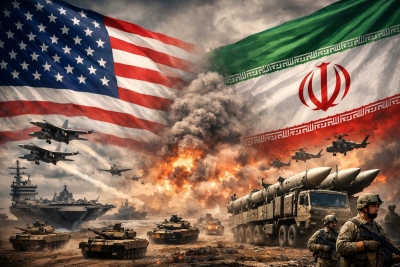
The missile attack by Iran against the military base Diego Garcia in the Indian Ocean constitutes an event that marks a new and extremely dangerous phase in the international geopolitical crisis.
For the first time, the war that began in the Middle East is clearly expanding beyond its traditional geographical boundaries, transferring tension to a wider region that includes vital sea lanes and strategic military installations.
The attack was carried out after Tehran warned that the use of British military bases by the United States for attacks against Iran would be considered an act of aggression.
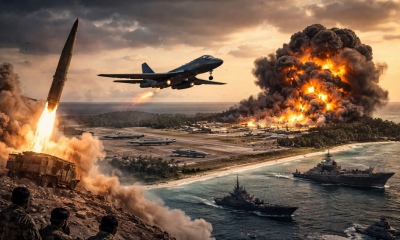
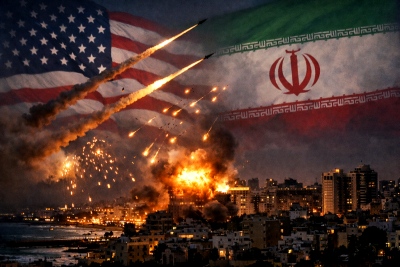
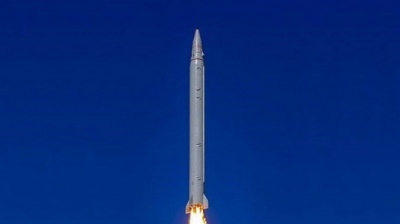
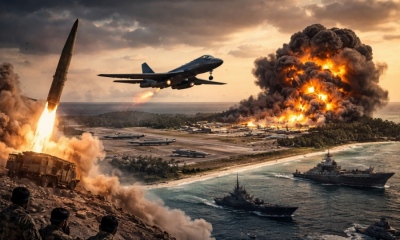
Shortly after this warning, Iran launched two ballistic missiles toward Diego Garcia, one of the most important military installations jointly operated by the United States and the United Kingdom.
This move highlights not only the growing capabilities of Iran, but also the increasing risk of a generalized conflict that could involve many countries and cause deep destabilization throughout the international order.

The attack on Diego Garcia
According to reports, Iran launched two ballistic missiles toward the Diego Garcia base, which is located approximately 4,000 kilometers away from Iranian territory.
This distance is particularly significant, as until recently many military analysts believed that this specific base was beyond the range of Iranian missile systems.
The attack therefore functioned as a clear demonstration of the real capabilities of Tehran.
According to a report by the Wall Street Journal, one of the two missiles reportedly failed during flight, while the second was intercepted by an SM 3 missile.
Even so, Tehran’s message was clear: no military installation used for attacks against Iran can be considered safe.
The attack also revealed another element of Iran’s strategy, maintaining strategic ambiguity regarding its real military capabilities.
This uncertainty functions as a means of deterrence, forcing opposing countries to always calculate the worst possible scenario.

The role of the United States and the United Kingdom
This escalation cannot be understood without examining the role of the United States and the United Kingdom.
Washington has taken a leading role in military operations against Iran, launching Operation “Epic Rage” on February 28.
This operation targeted Iranian military infrastructure and missile installations, dramatically increasing tension in the region.
London had initially expressed reservations regarding the use of British bases for attacks against Iran.
However, after the Iranian response and the escalation of the conflict, the government of Keir Starmer made a striking shift in stance.
The decision to allow the use of British bases by American forces was characterized by many analysts as one of the most remarkable political reversals of recent years.
This change came while the President of the United States Donald Trump had exerted intense pressure on his NATO allies, accusing them of hesitating to actively participate in the operation to open sea lanes in the Strait of Hormuz.

The critical importance of the Strait of Hormuz
The Strait of Hormuz constitutes one of the most important maritime arteries on the planet.
A huge percentage of global oil trade passes daily through this narrow passage.
The Islamic Revolutionary Guard Corps of Iran has imposed de facto restrictions on navigation in the region, in an effort to exert pressure on Western powers.
This situation has caused intense concern in international energy markets, as any prolonged disruption in the flow of oil from the Persian Gulf could lead to a serious economic crisis worldwide.
However, the effort of Western powers to secure control of the Strait of Hormuz is not limited only to naval operations or patrols in the Persian Gulf.
On the contrary, it is part of a broader military strategy based on the use of an extensive network of bases in Europe and the Middle East.
The United States, with the support of the United Kingdom and Israel, has developed a multi-layered military infrastructure that allows the launch of long-range attacks against Iranian targets.
Within this strategic architecture, certain bases acquire particular importance, as they function as hubs for the deployment of strategic bombers and the conduct of large-scale operations.
One of the most critical facilities in this network is RAF Fairford in Britain, which has been transformed into a key launch point for long-range air strikes.

The bases and countries that follow are now targeted by Iran, which surprises with its missile capabilities:
RAF Fairford, the European base of American bombers
One of the most important bases used by the United States is RAF Fairford in England.
This base has been transformed into a key hub for the operations of American strategic bombers against targets in Iran. After the approval of the British government, RAF Fairford hosts a large number of heavy bombers of the American air force.
Among them are the B 1B Lancer and B 52H Stratofortress, two of the most powerful strategic bombers in the world.
The use of the base allows the United States to significantly reduce flight time to Iranian targets, more than 50% compared to takeoffs from American territory.
This means that more missions can be carried out in a shorter period of time.

Diego Garcia, the strategic fortress in the Indian Ocean
The Diego Garcia base has for decades been one of the most important military hubs of the United States and the United Kingdom.
It is located in an extremely strategic position, at the crossroads of sea routes connecting Africa, the Middle East, and Asia.
The base functions as a center for supply, naval operations, and intelligence gathering.
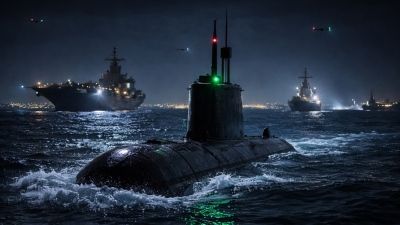
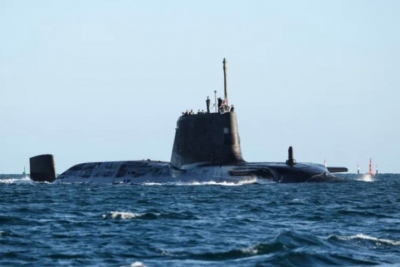
Its airfield can host long-range strategic bombers, while its port can accommodate large warships and submarines.
Among the forces stationed there are nuclear submarines and guided missile destroyers, while it frequently hosts stealth bombers such as the B 2 Spirit.
From this base, long-range weapons can be launched without aircraft entering Iranian airspace, allowing massive attacks against military infrastructure.

The network of British bases in the Middle East and the Mediterranean
The United Kingdom maintains an extensive network of military installations throughout the Middle East.
In Bahrain, the HMS Jufair base operates as Britain’s main naval facility in the Persian Gulf.
In Oman, the Duqm base serves as an important support center for aircraft carriers and marine units.
In Qatar, the United Kingdom uses the large Al Udeid air base, which functions as an operational center for air operations in the Middle East.
In the United Arab Emirates, Britain has access to the Al Minhad Air Base, while in Cyprus it maintains bases in Akrotiri and Dhekelia.

These bases constitute critical elements of the Western military presence in the region and are used for air operations, surveillance, naval security, and troop support.

The risk of a World War
The attack by Iran on Diego Garcia marks a significant geopolitical development, the transfer of the conflict from the Middle East to the Indian Ocean.
This development shows that Tehran is willing to strike not only the United States but also its allies who facilitate attacks against it.
The fact that so far no British base in the Middle East has been a direct target of Iranian missiles does not mean that this cannot happen in the future.

Many experts warn that, if the conflict continues to escalate, these bases will certainly become targets.
The involvement of the United States, the United Kingdom, and Israel in an increasingly aggressive strategy against Iran dramatically increases the risk of a broader regional conflict.
Such a conflict could affect not only the Middle East but also the global economy, energy security, and international stability.

History has shown that wars that begin as “limited operations” often evolve into much larger conflicts.
And as more and more countries become involved in the confrontation, the world is faced with a danger that can no longer be ignored: the possibility of a war that will extend far beyond the borders of the Middle East and affect the entire planet.
www.bankingnews.gr






Σχόλια αναγνωστών